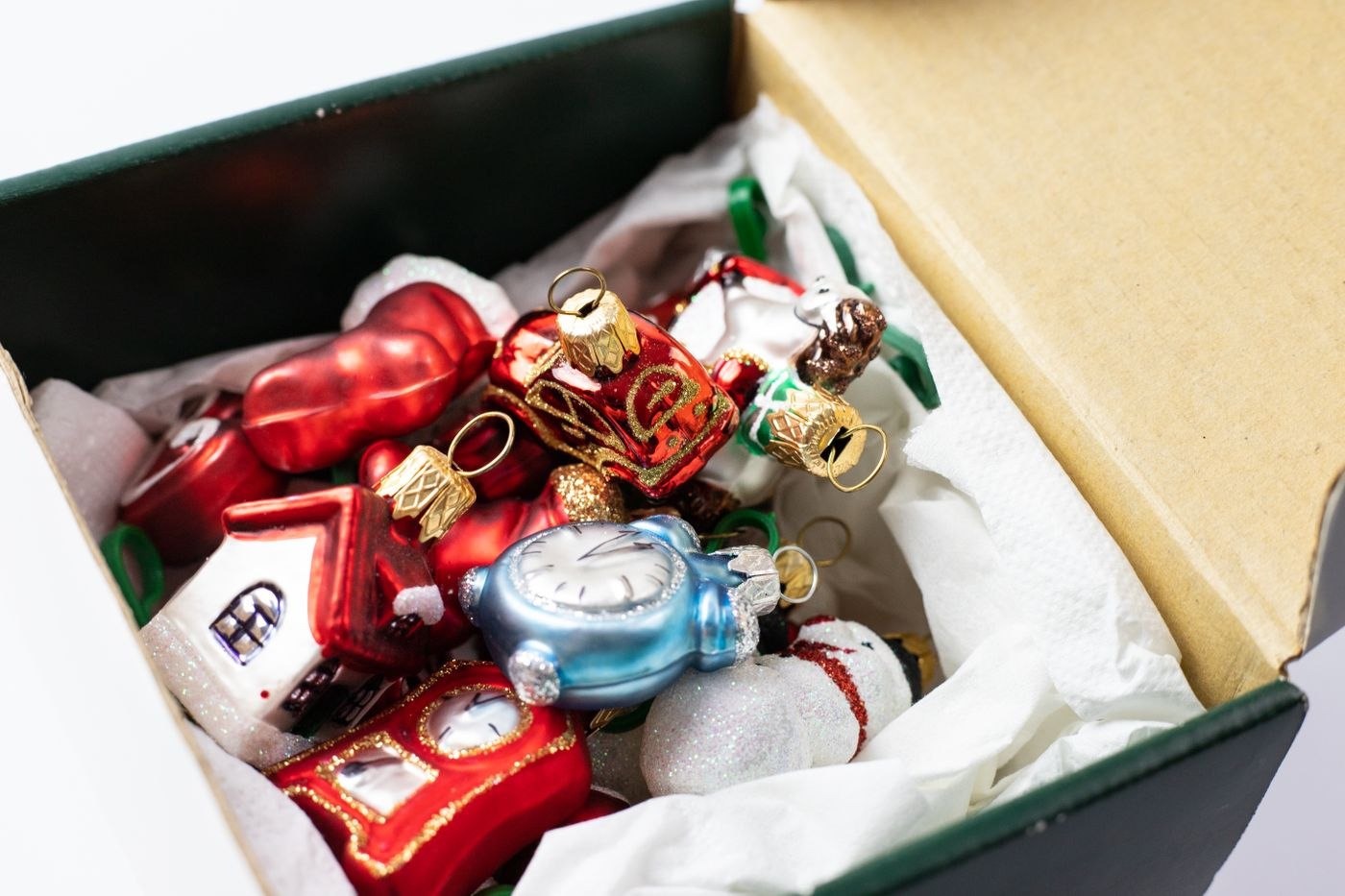
A decoration box labeled only “holiday” may contain lights for one room, fragile ornaments for another, and several items no one remembers using. Organizing by destination or activity makes the next setup easier and helps reveal what can leave the collection.
Pack with the next setup in mind
Group items that are used together, such as a table arrangement or the decorations for one shelf. Keep essential fittings with the item they belong to, in suitable labeled packaging. A photograph of a complicated arrangement can help if you want to recreate it, but a simple written description may be enough.
Do not pack broken items without deciding their next step. Repair them appropriately before storage or identify a specific repair plan. Damaged electrical decorations need particular care; do not assume they are safe to use because the damage can be hidden.
Protect the materials
Use storage suited to fragile, fabric, paper, and electrical items rather than compressing everything into one container. Keep heavy objects from resting on delicate pieces. Follow product instructions for batteries and electrical storage, and avoid leaving loose batteries among metal decorations.
Everything should be clean and dry before it is enclosed. Check whether the proposed storage location becomes damp or unusually hot. A garage, attic, or basement may have conditions unsuitable for some materials even when there is plenty of space.
Label for identification and retrieval
Include the occasion or season, the main contents, and the room where they are used. If a container holds a fragile item, make that clear. A label should remain visible when boxes are stacked in their normal position.
Keep container weights manageable and avoid placing heavy boxes overhead. Leave access to the items needed first. If lights must be installed before other decorations, do not bury them at the bottom of the collection.
Separate favorites from automatic leftovers
After decorating, notice which pieces remained in the box. Some may be kept intentionally for a different setting or family use. Others may simply be carried through each year without a reason. Decide while you remember the context.
Offer or donate usable items through an appropriate route if they no longer belong. Check acceptance requirements, particularly for electrical goods. Avoid passing on damaged products as a way of avoiding a disposal decision.
Keep the storage map simple
If several containers are stored in different places, keep a brief list of their locations. You do not need a detailed inventory of every small ornament. The list should solve a real retrieval problem.
Leave enough room to remove a box without destabilizing the stack. When the season returns, inspect items before use and follow their instructions. Good packing makes setup easier, but it does not replace checking the condition of products that have spent months in storage.