Shared storage does not have to mean shared ownership. A hallway cupboard or bathroom shelf may hold objects belonging to several people, some available for common use and others personal. Make that distinction visible before reorganizing. The purpose is to reduce uncertainty, not to turn ordinary borrowing into an administrative process.
Agree on what is shared
Identify common supplies and personal belongings together. Do not infer permission from where something has been placed. An item on a shared shelf may simply have nowhere else to live. Ask about borrowing, replacement and any objects that should not be used by others.
Keep the agreement concrete. A household may share a basic tool but keep a particular hobby tool personal. Similar-looking products can also have different uses or requirements. A brief explanation prevents people from treating objects as interchangeable when their owners do not.
Give each person a recognizable area
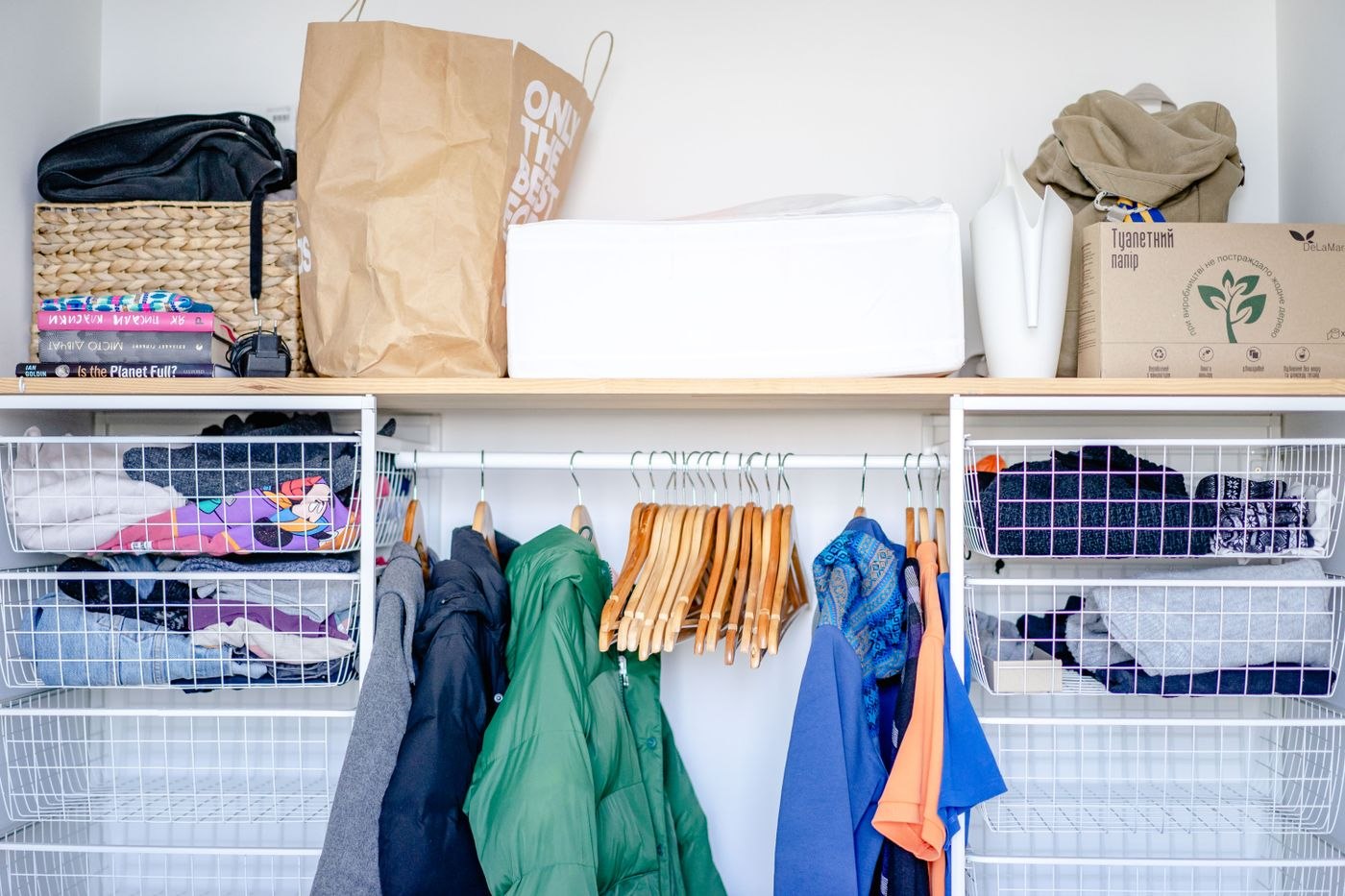
A shelf section, drawer or suitable container can establish a boundary without filling the home with labels. Choose an arrangement that fits the amount of space and the items involved. Make sure each person can access their belongings without unloading someone else's collection.
If storage is unequal because needs differ, discuss that rather than letting it emerge through whoever places items first. Equal physical space is not always the most useful arrangement, but the reason for a difference should be understood and open to review.
Ask before editing another person's possessions
Do not discard, donate or rearrange personal items merely because they appear unused. An object may have a purpose or meaning that is not visible. Offer to help sort if wanted, and let the owner make decisions about their belongings.
Where an item creates a safety or access problem, discuss the specific issue and an appropriate place for it. Respecting ownership does not mean ignoring a blocked walkway, but resolving the problem should still involve the person where possible rather than silently removing the object.
Make returns part of borrowing
Agree on returning an item to its place and mentioning damage, missing parts or a supply that has run out. Quietly putting an incomplete item back can create more frustration than a straightforward conversation. If borrowing requires asking first, make that expectation clear before the next occasion.
Review the storage when someone moves in, a hobby expands or a room changes use. Boundaries that were obvious with two people may become confusing with three. A simple, visible arrangement helps the household share limited space while allowing each person some control over the things that are theirs.