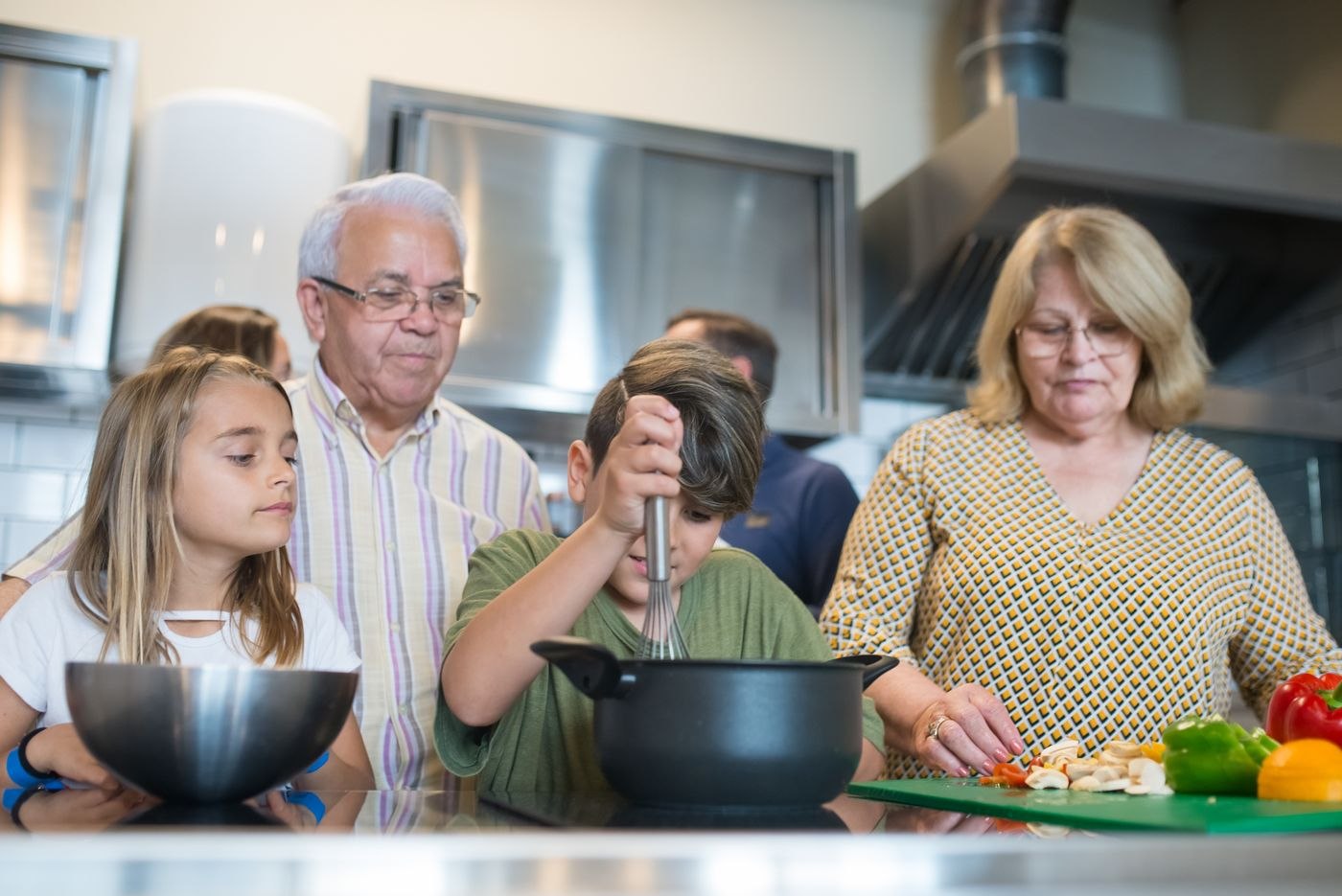
Two people can make cooking easier, or they can spend the evening reaching past each other. The difference often lies in how the work is divided. Before opening ingredients, read the recipe together and identify the parts that can happen at the same time. A short discussion about the counter, sink and stove can prevent a much longer series of interruptions.
Give each person a complete piece of work
An assignment such as “make the dressing” is clearer than repeatedly handing over individual chopping requests. A complete task lets someone see its ingredients, equipment and finish. Choose tasks that fit each person's confidence and the time available. Learning a new technique may be enjoyable on a relaxed afternoon but stressful just before guests arrive.
Name the handoff when tasks depend on each other. For example, vegetables might need to be ready before a pan is heated. The person doing the preparation should know when they are needed, and the person at the stove should know whether to wait. Avoid assuming that both people are following the same mental timeline.
Draw a boundary around hot and raw work
Decide who is handling the stove and where hot pans will land. Keep that landing area clear throughout the session. When handling raw animal ingredients, explain which boards, utensils and areas have been used so they are not accidentally borrowed for ready-to-eat food. Follow food-safety instructions for the ingredients and clean equipment between incompatible tasks.
A helper can be valuable without standing at the same counter. Setting the table, measuring dry ingredients or clearing washed equipment may remove pressure from the busiest area. In a narrow kitchen, taking turns at the main preparation surface can be more efficient than trying to work side by side.
Make requests specific and timely
“Please drain this when the timer rings” tells a helper more than “watch that.” Check that the person has heard and accepted the task. A timer sounding somewhere in the room does not establish responsibility by itself. If a task changes, tell the person rather than silently taking it over.
Keep room for different methods when they produce the needed result. Reorganizing every ingredient someone has just prepared can make helping unpleasant. Reserve corrections for things that affect safety, the recipe or the agreed finish, rather than insisting that every movement match your own habits.
Agree on the last job
Cooking together does not have to end when the food reaches the table. Decide who will store food promptly, deal with cookware and restore the workspace. Sharing that closing work prevents one person from experiencing the session as a pleasant activity while the other inherits the kitchen afterward. A brief review over the meal can identify one adjustment for next time.