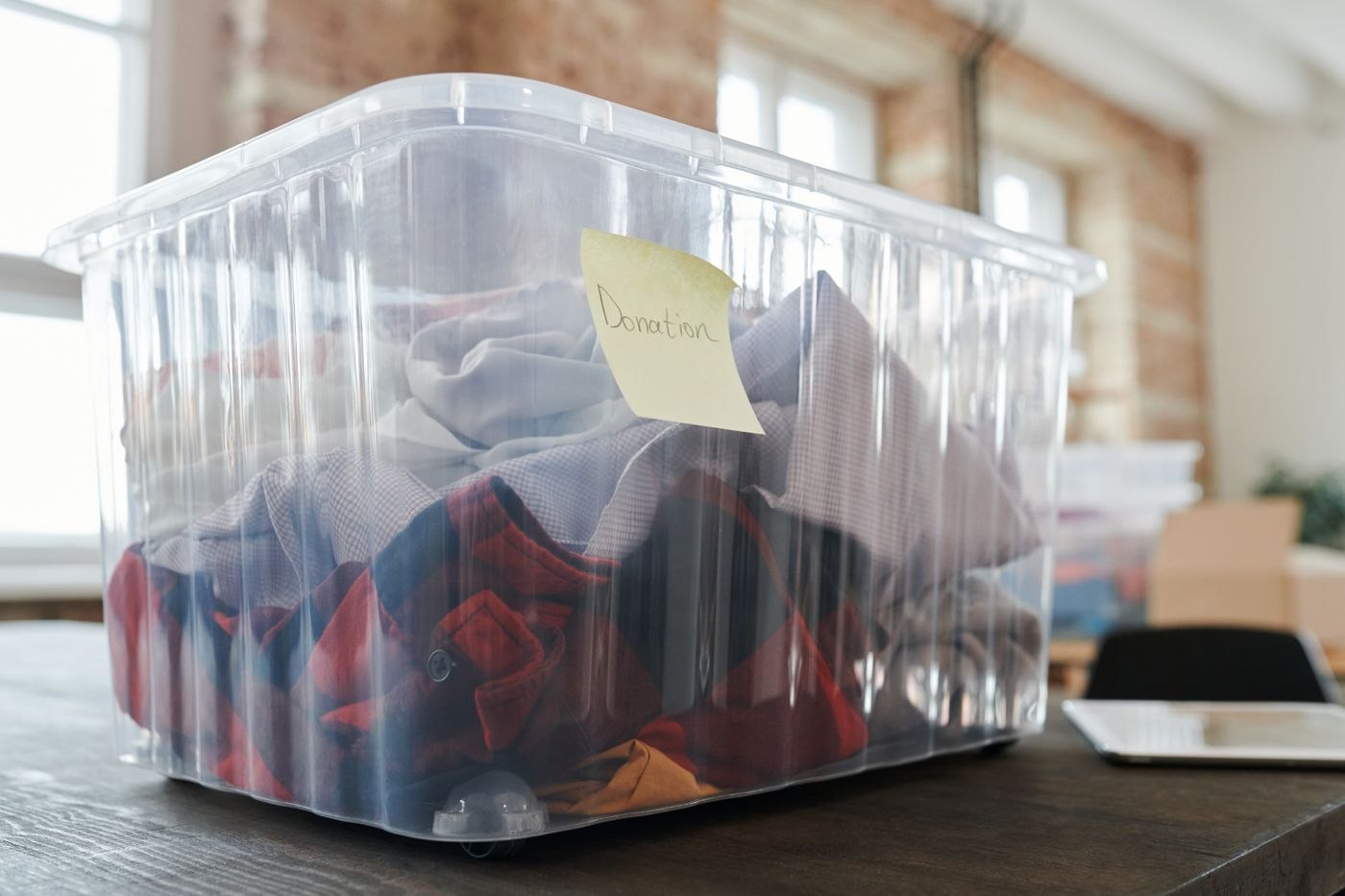
A donation box is only the first stage of donating. Without a destination and a plan to leave the home, it becomes another storage category. Choose the receiving organization or route early so you know which items belong in the box and what condition they need to be in.
Check what is accepted
Look at the organization’s current guidance before adding bulky, electrical, safety-related, or specialist items. Acceptance can vary by location and change over time. Do not assume that an item accepted years ago is still wanted.
Be honest about condition. Clean, complete, usable goods are different from damaged items that require repair. Donation should not transfer the cost of disposing of unusable belongings to another organization. If you are uncertain, ask before transporting the item.
Keep the box bounded
Choose a manageable container and a location that does not obstruct walking or exits. Avoid a box so large that it becomes difficult to lift. Fragile objects need suitable protection, and sharp or hazardous items should not be added casually.
Keep other household members’ belongings out unless they have agreed. A shared donation box should not become a place where one person silently decides what another no longer needs. Label it clearly so it is not mistaken for ordinary storage.
Assign the next movement
Choose who will take the box and when. Pairing the trip with an existing route can help, but confirm opening hours, drop-off instructions, and any booking requirements. Do not leave goods outside a closed location unless the organization explicitly permits that arrangement.
For a collection service, check accepted items, access requirements, and whether someone must be home. Keep the goods ready in the agreed place without moving them outside too early or exposing them to weather.
Handle items that do not belong
If the organization declines an item, give it a separate next step: another appropriate recipient, repair, recycling, or disposal. Do not return it to the donation box indefinitely. Electrical and hazardous materials may require specific local routes.
Keep paperwork related to a donation where appropriate for your circumstances, but do not assume a particular tax treatment. Seek relevant advice if that matters to you. The household task is complete when the item reaches an appropriate destination, not when it has been placed in a labeled carton.
Prevent the replacement pile
After the box leaves, put the container away or keep a small new collection point only if it is useful. Review why certain items were no longer used before buying replacements. A successful donation routine creates space for current needs rather than encouraging a cycle of filling and emptying the same cupboard.