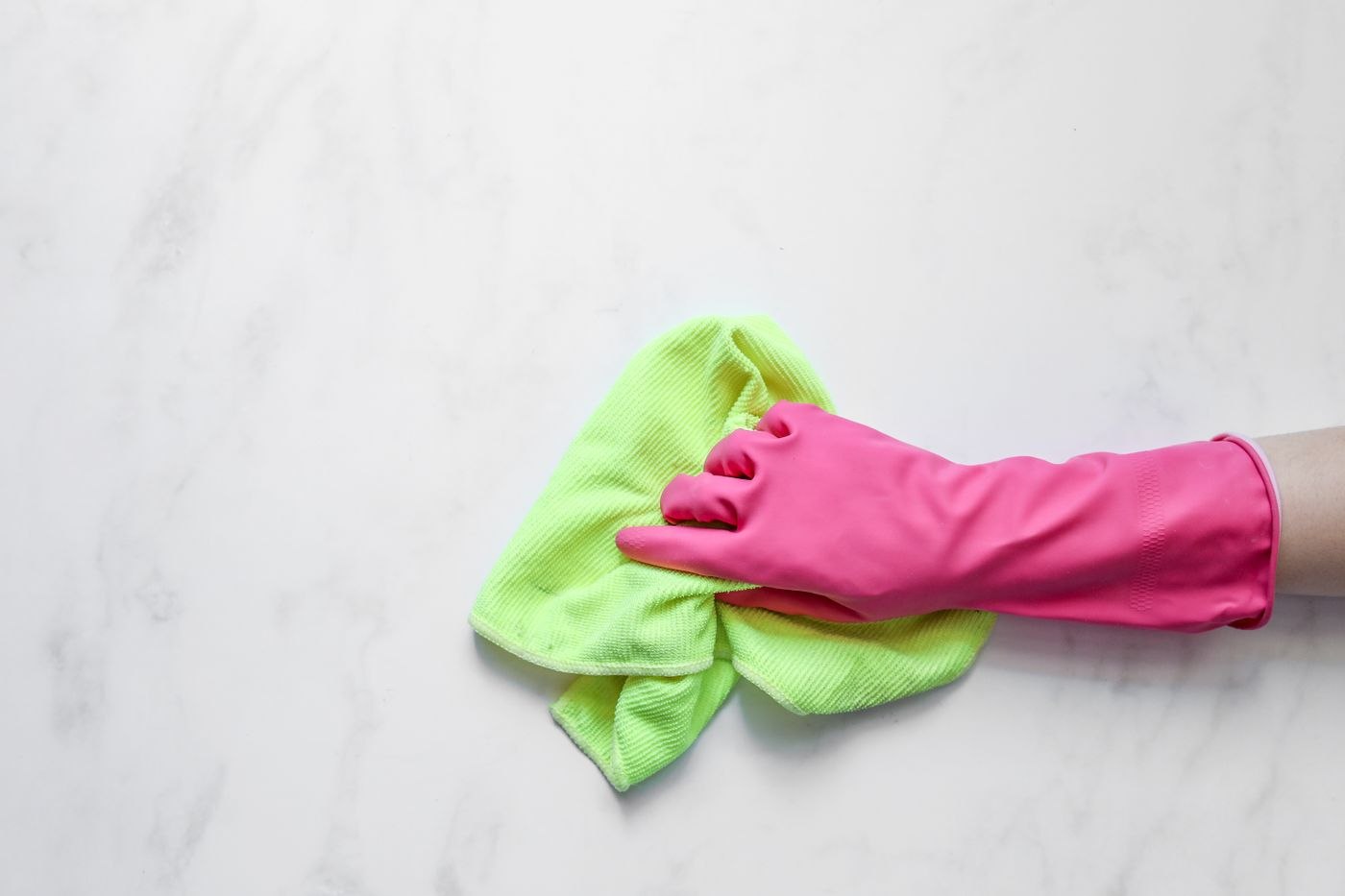
Reusable cloths need a route through the household, not just a basket of clean ones. Decide where a cloth starts, how its task is identified, and what happens after use. Without that sequence, a damp cloth on the sink can be mistaken for a clean one or carried to an unsuitable surface.
Use a few meaningful distinctions
Separate tools used in toilet areas from those used on kitchen or other household surfaces. Colors, labels, or distinct storage can help, but everyone sharing the work needs to understand the meaning. A color system known only to one person is not a reliable system.
Keep the categories limited to the distinctions that matter. Too many similar shades or specialized labels can make ordinary use confusing. The purpose is to prevent inappropriate reuse, not to create a collection that requires a chart for every task.
Give used cloths an unmistakable destination
Place used cloths in a suitable designated location for laundering or other care, separate from clean supplies. Avoid leaving them in a folded stack that looks ready to use. Handle cloths exposed to particular contaminants according to appropriate guidance rather than treating every task identically.
Allow suitable drying and avoid leaving damp cloths densely bundled for long periods. Keep the collection point secure from children and pets where necessary, particularly if cleaning-product residues are involved.
Follow textile and product instructions
Read the cloth’s care label and the cleaning product’s directions. Some materials or finishes may have restrictions. Do not assume that a very hot wash, bleach, or fabric softener is suitable for every reusable cloth.
Wash and dry items appropriately before returning them to clean storage. Keep damaged or worn-out cloths out of the ready-to-use group when they no longer serve their purpose. Avoid turning a heavily contaminated item into an ordinary rag without considering its history.
Store clean cloths near the work
A small clean supply can be convenient near a cleaning area, provided it stays dry and protected from splashes or leaking chemicals. Store the main reserve elsewhere if the local space is limited. Do not crowd clean textiles beneath bottles that may leak.
Keep enough cloths for the routine washing interval, but question an excessive reserve that makes sorting harder. The right quantity supports use and care without requiring a separate laundry project every day.
Review the handoff
If cloths repeatedly end up on counters, make the used-cloth destination easier to reach or more obvious. If people cannot identify the clean supply, simplify the labeling. A reusable system works when the next person can tell the status of a cloth without guessing.