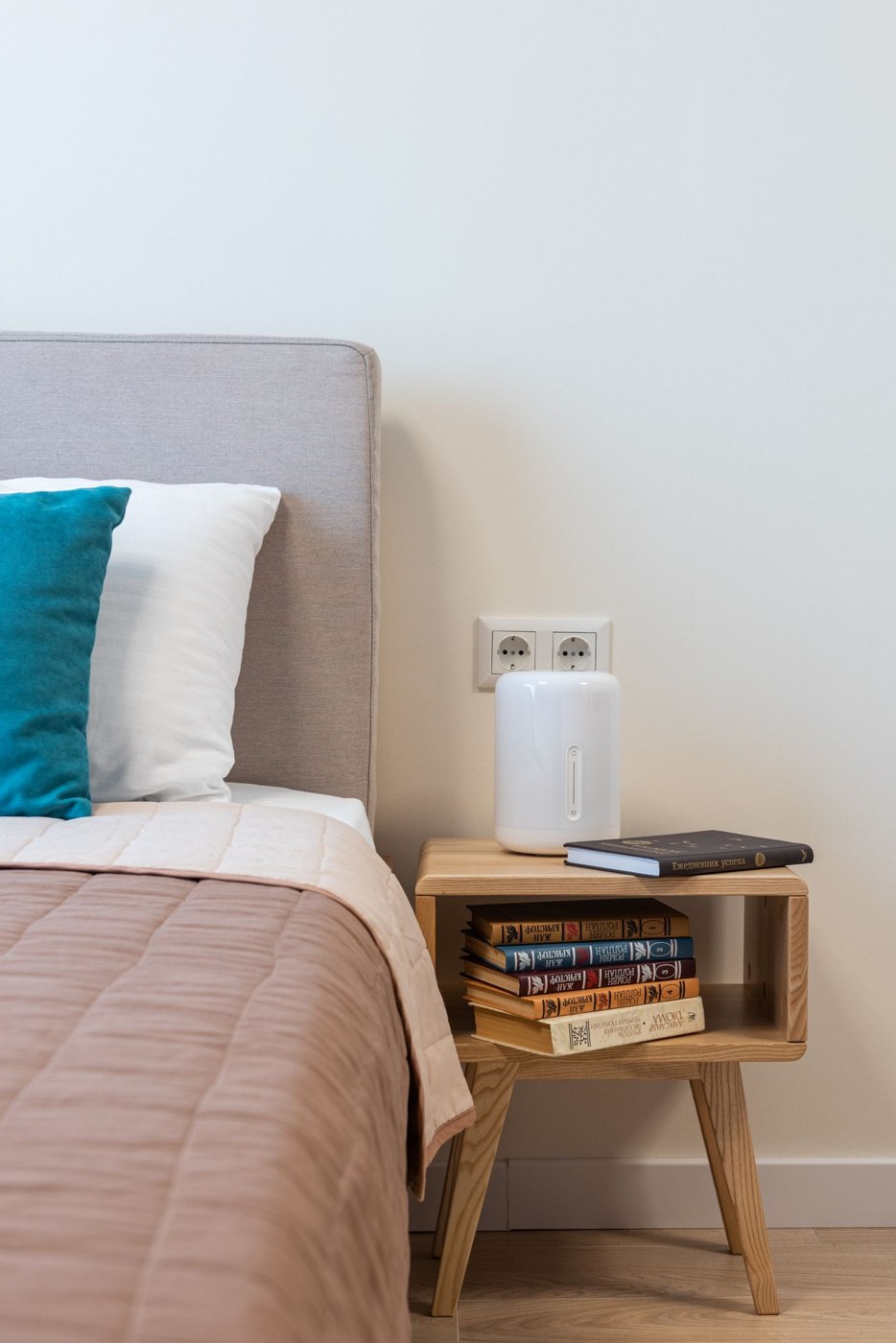
At the bedside, reach matters more than display. A table can hold what you need at night without accommodating every book, spare cable, and unfinished task that enters the bedroom. Begin by noticing what you actually reach for while in bed and what merely gets put down there during the day.
Divide immediate use from storage
An accessible lamp control, glasses case, and current book may belong on top. Extra notebooks, receipts, and several charging adapters usually do not need the same position. Move them to their ordinary storage place before choosing any new organizer.
If medication is part of your routine, follow its storage instructions and keep it secure from children or visitors who should not access it. A bedside location is not automatically suitable because it is convenient. Consider privacy and safety alongside reach.
Arrange the surface in the order you use it
Lie or sit in your usual position and check whether you can operate the light without reaching across a drink or knocking over an object. Put fragile items away from the edge. A small tray can give glasses a predictable place, but it should not occupy most of the usable surface.
Keep charging cables from dropping into the walking path or getting caught in a drawer. Do not run cords beneath a rug. If the lamp needs an awkward cable route, changing the lamp position may be better than adding more cable clips around an unsuitable arrangement.
Use the drawer for a defined purpose
A drawer works best when its contents can be named: personal reading items, for example, rather than everything without a home. Remove duplicates and objects used in other rooms. A shallow divider may help small items remain visible, but only after you know what needs to stay.
When replacing the table, compare its height and footprint with the bed, door, and available path. A wider surface can be useful, yet it may make movement around the bed worse. Test the proposed dimensions with a paper outline before buying.
Reset without making another chore
Return stray items when you make the bed or replace a book. This does not require polishing an empty surface every morning. The aim is to keep the essential items predictable and the route beside the bed clear.
If the table keeps filling with paperwork, look for the missing destination elsewhere in the home. A tray by the entrance or a desk folder may solve the problem more effectively than another bedside container.