Children can take part in household work without being expected to perform it like an adult. Begin with a small, understandable task that is safe for the individual child and useful to the home. The aim is participation and practice. A complicated reward system is not necessary for showing where an object belongs or how a familiar task is completed.
Show a task with a visible finish
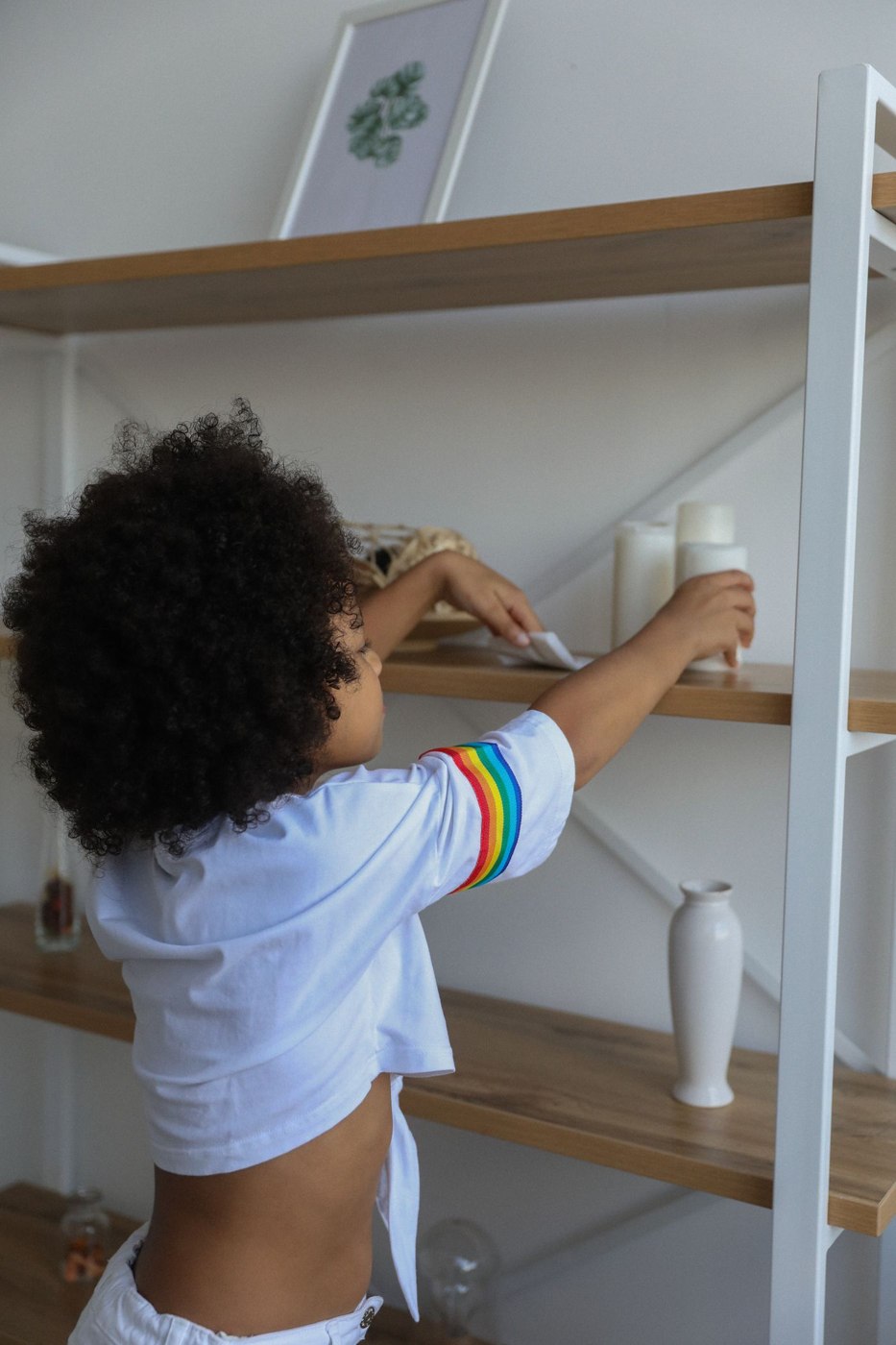
“Tidy the room” contains many decisions. “Put these books on this shelf” is easier to understand. Show the task, do part of it together, and point out the finish. Use a place the child can reach safely without climbing or handling unstable furniture.
Choose a manageable amount. Returning a few toys or matching clean socks may be a better starting point than sorting an entire cupboard. The child's abilities, attention and interest matter more than a rigid list based only on age. Adjust the task when it proves too difficult rather than interpreting difficulty as unwillingness.
Keep adult responsibilities clear
Adults remain responsible for safety and for tasks involving hazardous products or equipment. Keep cleaning chemicals, sharp tools, hot cookware and other hazards appropriately secured. A child participating nearby does not make an unsafe task suitable for them. Supervise according to the activity and the child's needs.
Avoid assigning work that depends on noticing a danger they have not learned to recognize. Instead, give a defined safe role within a larger adult-led task. During a room reset, a child might return sturdy books while an adult deals with fragile objects or cleaning products. This lets participation happen without disguising the responsibility involved.
Make the environment easier to understand
Use a small number of clear storage destinations. A simple picture or word label can help if it suits the child, but too many categories can create confusion. Observe what they actually do: a box may be too heavy, a lid too stiff or a shelf already too crowded.
Keep the same sequence long enough for practice. Constantly reorganizing the room can make a task feel new each time. When storage changes, show the new arrangement rather than expecting a child to infer the adult's reason for moving everything.
Notice contribution without demanding perfection
Describe the useful action: the shoes are together, the books are off the floor, or the table has space for dinner. Specific feedback connects the work with its effect. Avoid comparing children or treating household help as a test of character.
Some tasks will take longer together than they would alone. Choose moments when there is room for that learning. On a rushed morning, an adult may need to complete the work and return to practice later. Participation can grow through ordinary repetition without making every busy moment a lesson.
A task can grow without becoming a large chore
Consider putting away clean table napkins. At first, an adult might carry the basket and show the child one accessible drawer. Later, the child may be able to gather the napkins, sort them from the other clean laundry and put them away with less prompting. The added responsibility comes from familiarity with the sequence, not from making the pile larger each week.
Watch for the point where assistance is still needed. If carrying the basket is difficult but sorting is enjoyable, keep the carrying with an adult. If the destination is forgotten, make the location clearer instead of adding a longer verbal instruction. The task can remain a shared contribution while different parts become easier. There is no requirement to remove all support as soon as a child completes it once.