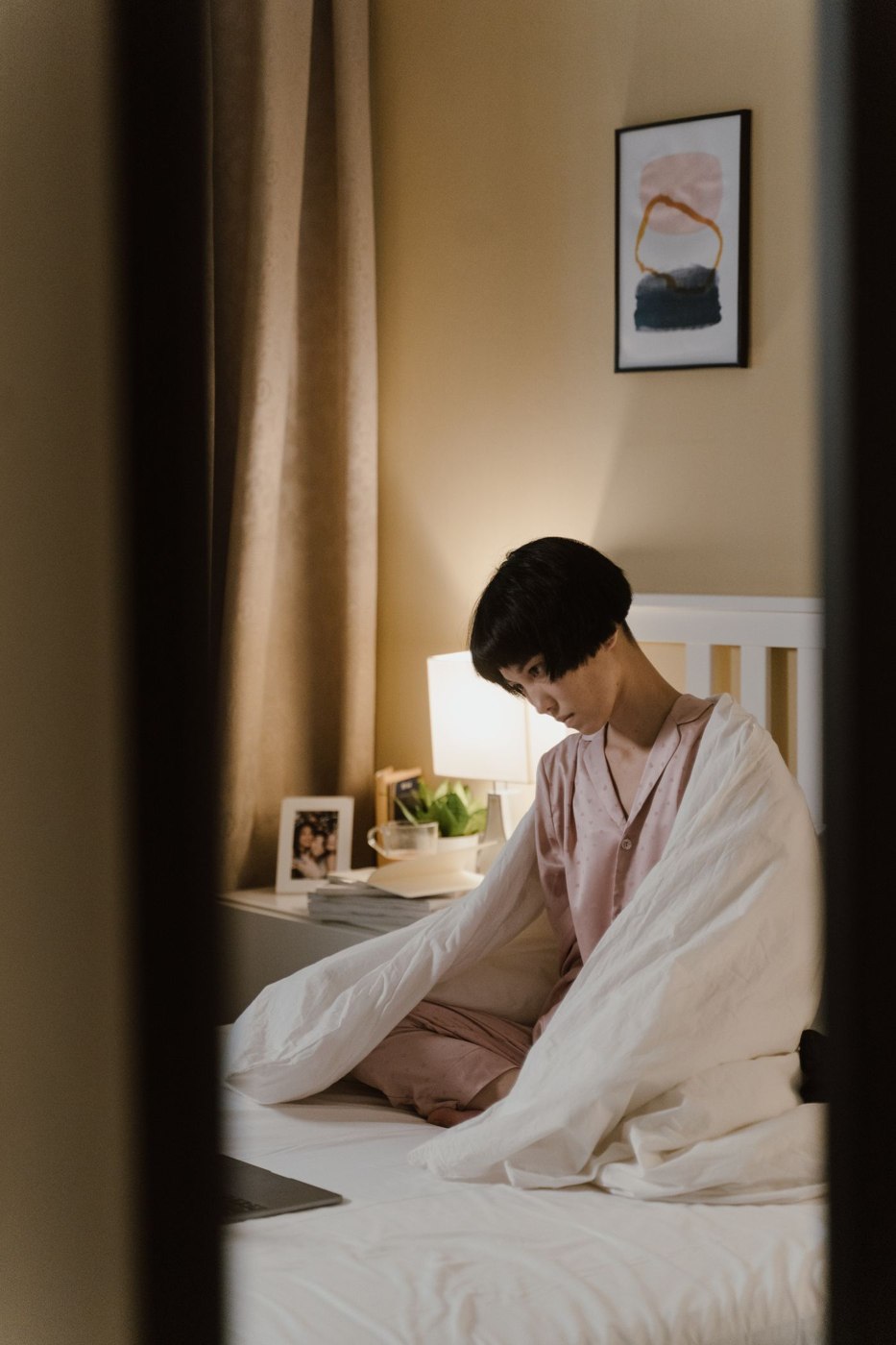
Pajamas are used during movement as well as rest: turning in bed, reaching for a light, and walking through the house. Choosing them involves more than the feel of a fabric on a shop hanger. Consider the fit and details in the positions in which you will actually wear them.
Check movement and contact points
Sit down, bend your knees, and move your arms where a fitting-room trial allows. Notice waistbands, buttons, pockets, and seams that press or pull. A garment that feels generous while standing may tighten when you sit or turn.
Choose a length that does not trail underfoot. Long ties and loose details can be inconvenient around the home. If you need accessible fastenings or clothing that works with an assistive device, make those requirements part of the comparison rather than treating them as an afterthought.
Read the composition and care label
Fabric names on the front of a package may be less precise than the fiber-content label. Check the full composition and any blend percentages. Texture and thickness can vary within the same fiber category, so compare the actual garment rather than assuming all cotton or all synthetic fabrics feel alike.
Look at washing and drying directions. A delicate care requirement may be inconvenient if pajamas normally join a routine laundry load. If ironing is not something you want to do, consider whether the expected appearance after washing will bother you.
Match the set to your use
Separates can be useful when you prefer different top and bottom sizes or need only one replacement piece. A coordinated set is not essential for comfort. Keep enough suitable items to cover your laundry rhythm without filling a drawer with pieces you avoid wearing.
Consider changing seasons through the garments you already own. A lighter top or different sleeve length may be enough; you may not need a completely separate wardrobe. Store the current options where they can be found without digging through less-used clothing.
Avoid turning comfort into a health promise
Sleepwear can feel pleasant and be easy to care for without claiming to improve a medical condition. Treat cooling, calming, or wellness language as something to examine, not as a guarantee of a particular night’s sleep.
If a new or persistent skin reaction, unusual sweating, or discomfort continues, seek appropriate professional advice. For ordinary buying decisions, focus on the things you can assess: fit, construction, care, and whether you actually want to wear the garment again after it has been washed.