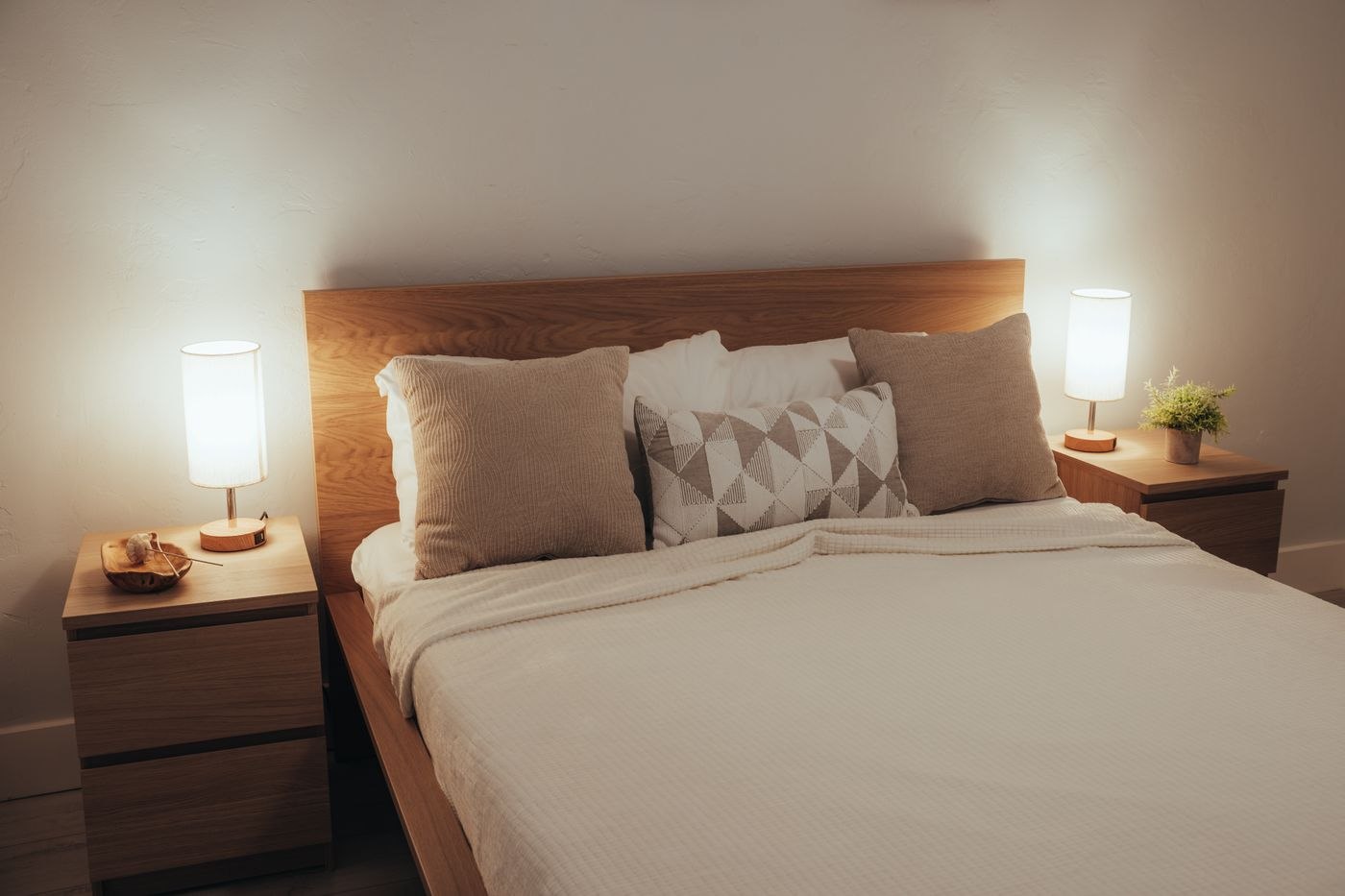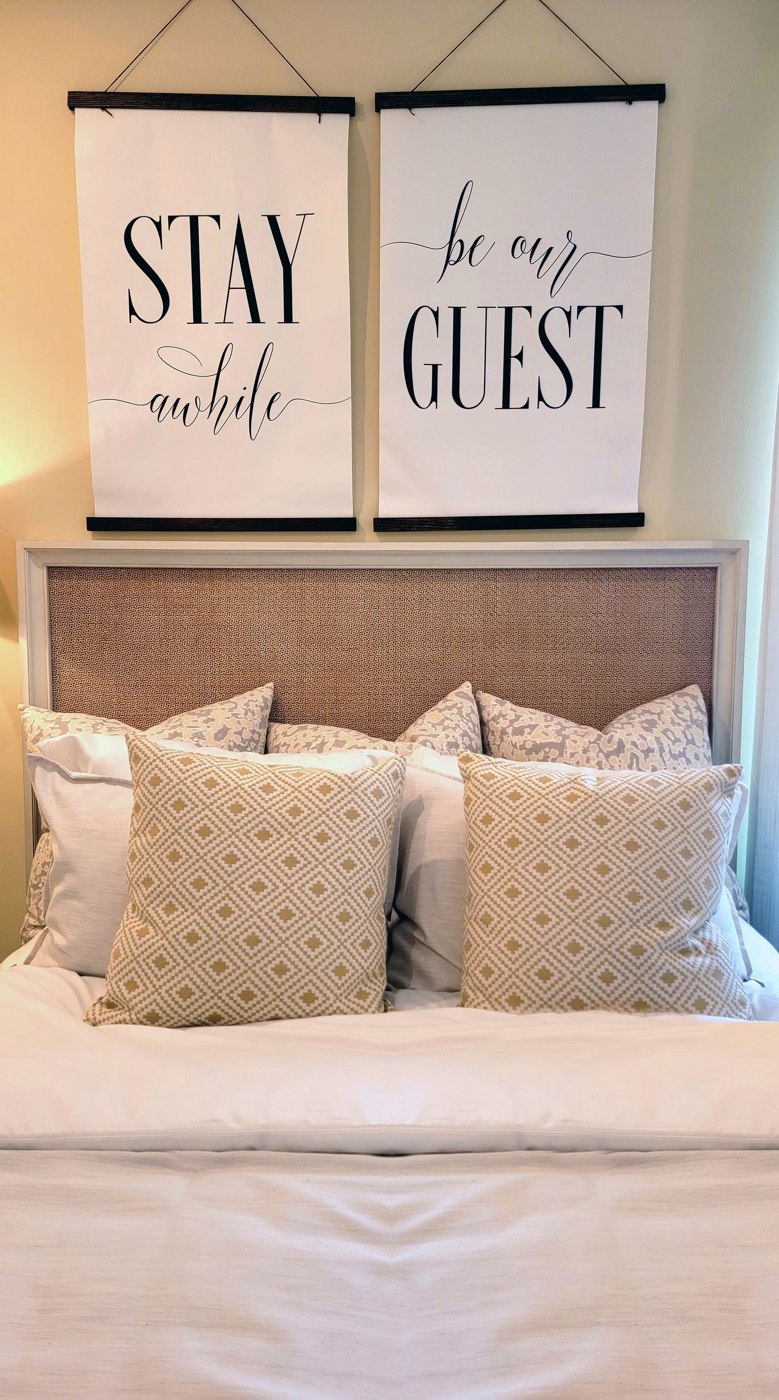
A guest bedroom does not need a collection of hotel-style extras to feel welcoming. Visitors usually benefit more from knowing where to put a bag, how to adjust the light, and which storage is available. Start with those ordinary needs before adding objects to the bedside table.
Clear space that guests can actually use
Leave a defined surface for a bag and a few empty hangers or part of a drawer. A wardrobe packed with household overflow is not guest storage simply because it has doors. If the room serves another purpose between visits, move the most obstructive items before the guest arrives.
Check the walking route from the bed to the door and bathroom. Remove temporary boxes and trailing cables. Guests will be less familiar with the room, so something the household routinely steps around can be especially inconvenient after dark.
Make the basics easy to understand
Place clean towels where they can be recognized as available. Show the visitor how the lamp, window covering, and room temperature controls work. If a window or door has an unusual catch, explain it rather than leaving the guest to discover it at night.
Offer a suitable extra bedding layer and identify where it belongs if it is not needed. Ask about comfort preferences without promising to solve a medical or allergy requirement. If a visitor has a specific need, discuss it before the stay so you can honestly describe what the room can accommodate.
Keep personal and household storage separate
A multipurpose guest room may contain paperwork, hobby materials, or spare supplies. Put private documents away securely and make clear which drawers are household storage. Do not leave chemicals, medication, or small hazardous items accessible merely because the room is usually unused.
A small empty tray can be useful for keys or glasses. A tray already filled with decorative objects is less helpful. Similarly, one clear outlet is often more useful than several unfamiliar gadgets. Keep electrical connections safe and follow equipment instructions.
Plan the room after the visit
Decide where used towels and bedding will go, and allow time for washing and drying before the next arrival. Keep a spare set only if there is a reasonable place for it. Avoid accumulating single-use toiletries or gift items that rarely get used.
After a visit, note any repeated question: where to charge a phone, which light switch works, or where to hang a coat. That question points to a useful improvement. A brief explanation or a cleared hook may solve it more effectively than buying another accessory for the room.